SESSION LEADERS
Thank you for joining us as a Session Leader!
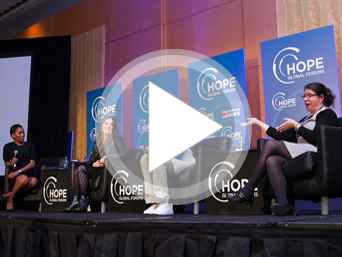
Please review the Session Leader Orientation video prior to your session at HOPE Global Forums:
The HOPE Global Forums are a community of events that serve as a call to action: to inspire innovation and thought leadership towards an inclusive global economy that works for everyone. With over 5,200 delegates from 40 countries, our Annual Meeting is now the largest and most prestigious gathering in the world on behalf of empowering the poor.
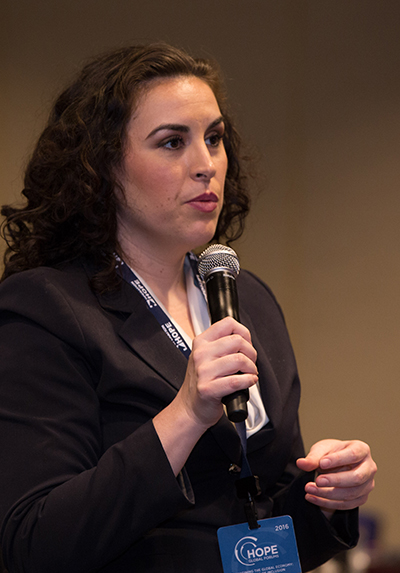
As a Session Leader, you are a qualified and experienced industry expert, tapped to facilitate a 30-minute table conversation around the topic area of your assigned Idea Lab session. You are key to facilitating input on the issues, sharing successful strategies and structuring recommendations and partnerships.
As a Session Leader, you will have the opportunity to engage in authentic dialogue with passionate, open-minded peers who believe in the power of ideas to change the world. You’ll have the opportunity to test your ideas for the future, and you’ll be challenged to positively impact your community and empower those around you in new ways.
Questions? Email Henna Rennie at henna.rennie@operationhope.org


IDEA LABS
Tuesday, December 2
(After lunch session)
Future Proofing Content Creation (HGF Studios)
Welcome to the creator economy — where storytelling meets strategy, and creativity has become one of the most powerful currencies of our time. In a world driven by algorithms and constant reinvention, content creators aren’t just entertaining audiences — they’re building movements, shaping culture, and creating new paths to economic freedom.
In this HGF Studios session, four leading influencers take the stage to share the real stories behind their rise — the wins, the pivots, the lessons, and the business of building a personal brand that lasts. From viral moments to monetization, they’ll dive into what it truly takes to future-proof your digital footprint — and your finances.
They’ll tackle questions like:
- How do you turn creativity into consistent income — and purpose into a platform?
- How can creators protect their work, scale their earnings, and still stay authentic?
- And how do you build a brand that not only thrives today, but also stands the test of tomorrow’s trends?
Whether you’re just a social media user, a curious entrepreneur, or a brand looking to connect in new ways — this session will challenge you to see the behind-the-scenes of content creation and how it can be used as tool for empowerment, education, and lasting impact.
Small Business Pop Up: How to Capitalize Your Small Business For Growth powered by Truist (Leadership Stage)
Capital is the fuel of innovation, entrepreneurial, and small business growth—but access to that fuel remains uneven. As a small business owner, you want to see your business thrive while you excel at serving your customers. When it comes to funding, you want to make sure the financing process doesn’t distract you from those goals. Learning why businesses borrow, how the lending process works, and where else to turn for funding, makes for a smoother, smarter, and often more successful outcome.
A good financing outcome starts with the confidence that securing funds is the right path to achieve the business results you want. The best source of funds will depend on many factors, like your development stage, amount of equity invested, profits accumulated, and funding needed. And your preparation for the financing process will often determine your success in securing capital. By future-proofing access to capital, we can fuel entrepreneurial innovation, grow stronger small businesses, and create a more resilient economy that works for everyone.
Powered by Truist, this session will deliver small business owners understanding of financing options and the borrowing process to put you in the best position to get the funding you need.
Questions:
- Should I seek funds? Where do I start?
- What’s the best financing option for my business?
- How can I prepare my business to grow?
- How are innovative models—such as impact funds, community development grants, government funded lending, and public-private partnerships—helping to expand access to capital?
Future-Proofing Aspiration (Magnificent 3)
Aspiration is the engine of upward mobility and economic progress—but today, many communities are grappling with shrinking optimism. Studies show that fewer than 50% of young Americans believe they will be better off than their parents, a sharp decline from previous generations. This erosion of belief doesn’t just dampen individual dreams; it stifles entrepreneurship, innovation, and workforce participation—limiting the economic potential of entire communities. Research indicates that regions with higher levels of educational attainment and aspirational confidence see faster GDP growth and lower unemployment, underscoring that cultivating ambition isn’t just motivational—it’s economically transformative.
Future-proofing aspiration means connecting belief with access—ensuring that pathways to education, wealth-building, entrepreneurship, and social mobility are visible and attainable. Programs that pair mentorship with skill-building and financial literacy have been shown to boost small business formation, household savings, and long-term earning potential. This session will explore how businesses, educators, policymakers, and community leaders can collaborate to inspire confidence, expand opportunity, and nurture a culture of possibility—transforming personal aspirations into engines of growth that benefit individuals, families, and entire economies.
How can businesses, educators, and policymakers better align programs that connect skills, mentorship, and financial literacy to real economic opportunities? How can stories of success—especially from a range of backgrounds—be used to spark aspiration and show that opportunity is within reach for everyone? How can we better track the economic and social benefits of aspiration-building programs to guide investments and policy? What strategies can be used to rebuild belief in upward mobility, especially among young people who feel left behind?
Future-Proofing Financial Access (Magnificent 4)
Financial access is more than a convenience—in an economy that’s 70% consumer spending, it’s a foundation for economic growth, upward mobility, and long-term prosperity. While technology has helped improve access, more than 1.4 billion adults worldwide remain unbanked, and many more rely on costly alternatives such as check-cashing services or payday loans. In the United States alone, an estimated 20% of households are underbanked, limiting their ability to save for emergencies, build credit, or access affordable lending. These gaps are not merely a challenge for individuals; they limit small business formation, dampen consumer spending, and slow economic growth.
Barriers to access often stem from a lack of affordable products, low financial literacy, geographic isolation, or mistrust of institutions. These challenges are especially acute in rural communities, among women and minority entrepreneurs, and in lower-income neighborhoods where traditional bank branches are disappearing. Closing these gaps could unlock billions in economic activity: studies have shown that increasing financial inclusion by just 10% can lead to a measurable boost in GDP and job creation. Ensuring access is not just a social goal—it’s a strategic investment in community and national economies.
Technology is transforming how individuals and businesses engage with financial services. Mobile banking, digital wallets, real-time payments, and AI-powered credit scoring are helping to lower barriers and reach people historically left out of the system. At the same time, these innovations bring new responsibilities for security, privacy, and equity to ensure that digital solutions close, rather than widen, the divide. Partnerships between fintech firms, established banks, nonprofits, and policymakers are proving that collaboration is key to making progress at scale. By future-proofing financial access, we can empower households to build savings, help small businesses thrive, and ensure that the benefits of economic growth reach every corner of society.
What steps can financial institutions and fintech companies take to build trust in underserved communities that have historically been excluded or faced predatory practices? How can we ensure that women, rural communities, and small businesses are not left behind as financial services become increasingly digital? Which partnerships or policy changes have shown the greatest impact on widening financial access, and how can they be scaled to reach more people and regions? How can digital wallets, real-time payments, and AI-driven credit scoring increase access to affordable credit while maintaining fairness and security?
Future-Proofing Work (Magnificent 5)
Work is changing faster than ever before. Automation, artificial intelligence, and shifting global markets are redefining job roles, skill requirements, and even where and how we work. While these advances promise productivity and new opportunities, they also risk leaving behind workers and communities who are unprepared to adapt. Nearly 40% of global jobs are expected to be disrupted or transformed by automation in the next decade, with the greatest impact on routine and entry-level positions.
The future of work will be shaped by our ability to close the widening gap between the skills employers need and the training workers receive. Today, more than 50% of U.S. employers report difficulty finding qualified talent for open positions, even as millions of workers remain underemployed. These mismatches limit productivity and wages, slowing both individual advancement and economic growth. Addressing these challenges is essential not just to compete globally but to ensure shared prosperity at home.
Immigration is also central to the future of work, helping fill critical labor shortages in healthcare, technology, agriculture, and other essential industries. With an aging domestic workforce and declining birth rates in many regions, immigrant workers are often key to sustaining economic growth. Recent data show that immigrants have driven nearly half of U.S. workforce growth over the past decade. Leveraging immigration thoughtfully—through skills-based visa programs, pathways to credential recognition, and equitable workforce integration—can strengthen competitiveness while meeting labor market needs.
As AI automates routine tasks, which new skills and roles will be most in demand, and how can employers, educators, and policymakers collaborate to upskill existing workers quickly and effectively? Considering labor shortages in fields like healthcare, logistics, and advanced manufacturing, how can immigration policy and skills-based visa programs complement AI-driven workforce analytics to fill critical gaps? Will the demand for workers in the trade industries improve social mobility while upending the value of college degrees? How can immigration policy, skills-based visas, and faster credential recognition for foreign-trained workers help fill critical labor shortages and strengthen economic competitiveness?
Future-Proofing Homeownership (Magnificent 6)
Homeownership remains one of the most powerful engines for wealth creation and community stability. Yet millions of families continue to be priced out or denied access to mortgage credit, widening the wealth gap and threatening a central pillar of the American Dream. In the United States, homeowners hold over $35 trillion in equity, which represents between 50–70% of net worth for most middle-income families. At the same time, first-time buyers face rising prices, limited inventory, and lending barriers—challenges that disproportionately affect younger, minority, and low-income households.
Persistent racial and generational disparities underscore the urgency for action: Black and Hispanic households continue to experience mortgage denial rates nearly double those of white applicants with similar incomes, and the homeownership gap between Black and white families remains close to 30 percentage points—roughly the same as it was in 1968. These inequities don’t just affect individual families; they slow small-business formation, reduce local tax bases, and limit opportunities for intergenerational wealth transfer that drives economic mobility.
Technology is also playing a critical role—streamlining underwriting, expanding alternative credit assessments, and improving access for first-generation buyers. This Idea Lab will spotlight practical solutions that rethink how people enter and sustain homeownership. We’ll explore innovations such as shared-equity models, down-payment assistance programs, credit-building initiatives, and new mortgage products that better reflect today’s workforce realities.
Participants will work alongside experts to generate actionable strategies that can scale nationally and locally. The goal: to help more families not only buy homes but keep them—building equity, strengthening communities, and ensuring that homeownership remains a cornerstone of opportunity for generations to come.
What innovative financing tools show the most promise in helping first-time and historically excluded buyers enter the market? How can we address disparities in mortgage approvals to close the homeownership gap and increase intergenerational wealth building? Beyond financing, what creative approaches to increasing housing supply could help keep homeownership within reach for working families? What policies or products can help families not just buy a home but keep it during periods of economic volatility, rising interest rates, or unexpected hardship? How can lenders, developers, community organizations, and policymakers better collaborate to scale solutions that make homeownership more affordable, equitable, and sustainable nationwide?
Future-Proofing Health and Wellbeing reimagined with the Les and Sheri Biller Foundation (Magnificent 7)
Strong health and well-being are both markers of thriving societies and essential drivers of economic strength. Yet, chronic conditions, mental health challenges, and preventable diseases continue to strain healthcare systems and limit productivity. These challenges are even more pronounced in rural and low-income areas, where access to quality care and preventive resources lags significantly. Studies show that communities with limited access to healthcare can experience life expectancy gaps of more than 10 years compared to more affluent regions, underlining the urgent need for inclusive, scalable solutions. Globally, improving workplace health and well-being could unlock up to $11.7 trillion in economic value, highlighting the immense return on investing in people.
The path forward lies in expanding access to preventive care, addressing mental health openly, and building inclusive wellness systems that serve all communities—urban, suburban, and rural alike. Advances in technology, from telehealth platforms to mobile diagnostics and AI-powered health tools, are helping extend quality care to hard-to-reach populations. Workplace wellness programs alone have been shown to return over $3 for every $1 invested through reduced healthcare costs and absenteeism, while closing the global women’s health gap could add $1 trillion annually to the global economy by 2040. This session will explore practical, future-focused strategies—from mobile clinics and digital health expansion to equitable policy design—that can close gaps in care, strengthen communities, and create a healthier, more resilient society for all.
How can emerging technologies like AI, digital health platforms, and wearable devices help deliver preventive care and improve outcomes? In what ways can institutions ensure that investments in health and well-being are inclusive? What innovative strategies—such as mobile clinics, telehealth, or public-private partnerships—are proving most effective in expanding care? What models are successfully normalizing and integrating mental health support? What steps can communities, employers, and policymakers take to make health and well-being a foundation for long-term societal and economic resilience?

IDEA LABS PROGRAM FLOW
| Time Allotted | Purpose | Actions |
| 5 min | Context Setting | Welcome and set expectations for Accelerator Breakouts |
| 30 min | Panel Discussion | Subject Matter experts weigh in. Participants submit questions to panelists |
| 30 min | Table Discussion* | Participants discuss issues, propose “Big Ideas” solutions for group conversation |
| 20 min | Results | Share 5 ‘Big Idea’ results with group |
| 5 min | Wrap-Up | Wrap-Up and next steps |
90 minutes total
* Session Leader Responsibility


WHO ATTENDS?
Attendees comprise an eclectic slate of stakeholders from across the spectrum of our integrated global economy. Last year, the corporate, financial, governmental, technology, academic, nonprofit, startup, diplomatic, philanthropic, media and faith-based sectors were all represented. Over 5,200 thought leaders and influencers representing over 40 countries attended.

PAST VIDEOS